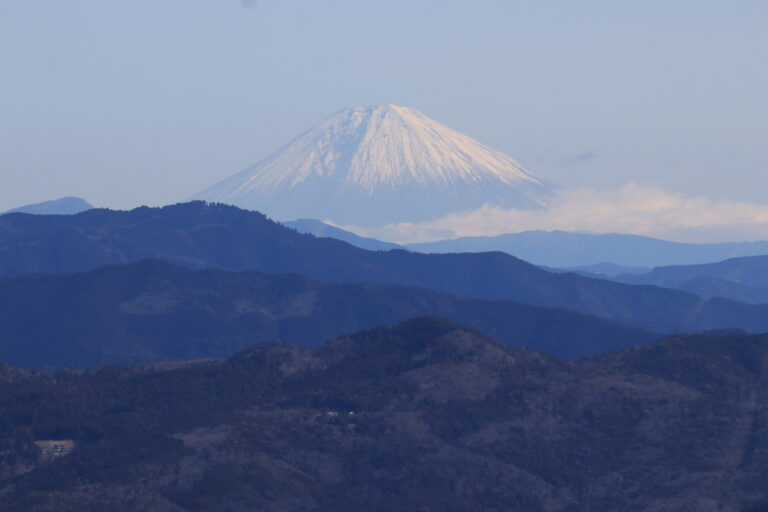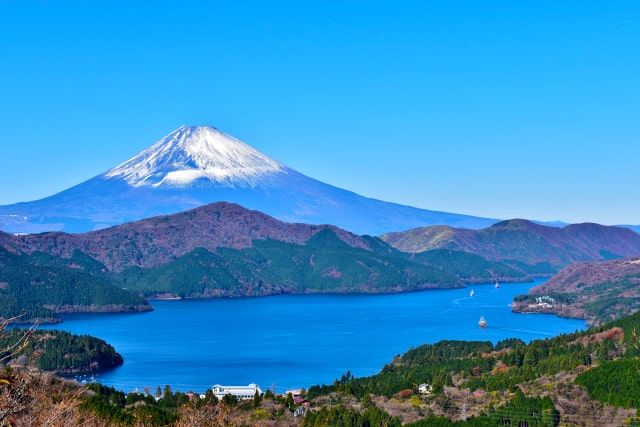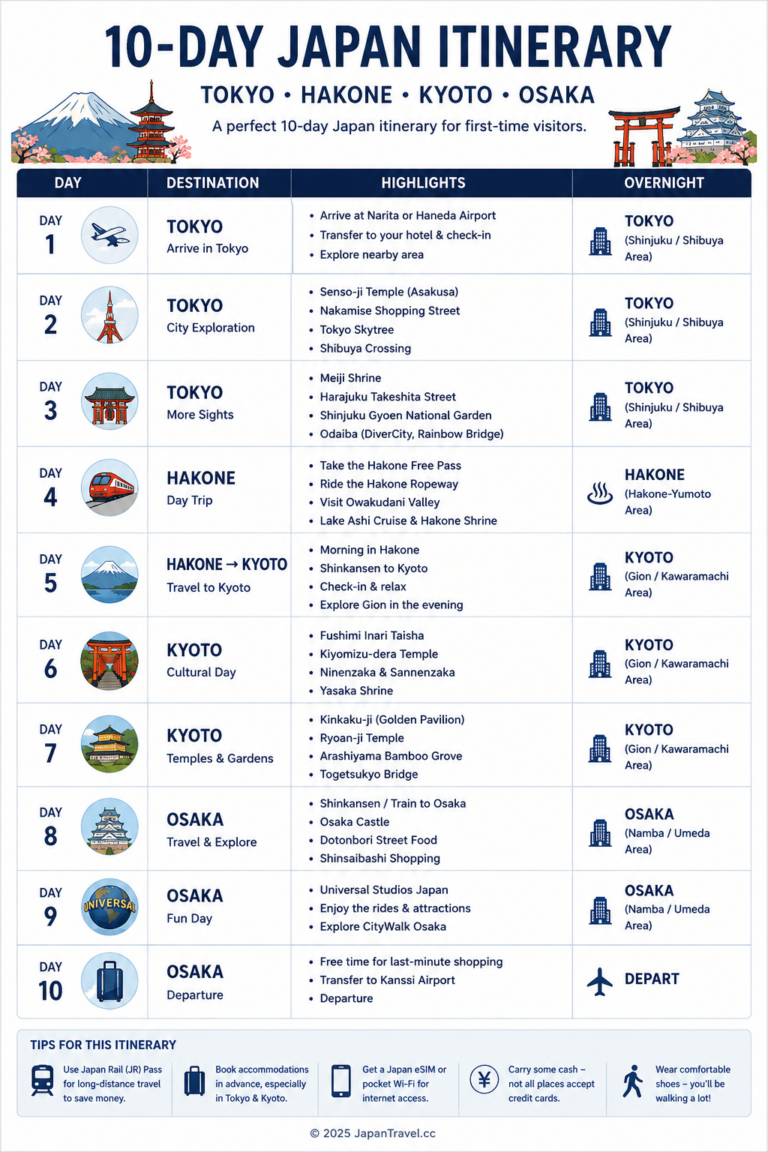
Hakone is one of the easiest ways to add hot springs, mountain scenery and a slower pace to a Tokyo itinerary. It works particularly well as an overnight stop between Tokyo and Kyoto.
Why visit Hakone?
Travelers come for onsen, traditional ryokan stays, Lake Ashi, Hakone Shrine, volcanic scenery and the possibility of seeing Mount Fuji on clear days. Weather can change quickly, so Fuji views should be treated as a bonus rather than a guarantee.
Day trip or overnight?
Choose a day trip if you mainly want the classic Hakone sightseeing loop. Choose one night if you want an onsen experience, a ryokan stay or a slower pace. Two nights can work for travelers who want a genuine break between Tokyo and Kyoto.
The classic Hakone experience
A typical sightseeing day can combine Hakone-Yumoto, the mountain transport network, Owakudani, Lake Ashi and Hakone Shrine. The exact order depends on operating conditions and where you are staying. Do not try to visit every attraction; choose a few experiences and leave room for weather or transport changes.
Getting there from Tokyo
The simplest route depends on your starting point. Odakyu services connect Shinjuku with Hakone-Yumoto, while Shinkansen travelers can use Odawara as a gateway before continuing into Hakone. Check the current timetable and ticket combination before travel.
For transport planning, compare available route options with Bookaway when it fits your trip.
Hakone in a longer Japan itinerary
Hakone works particularly well between Tokyo and Kyoto because it changes the rhythm of the trip. After several busy city days, an onsen-focused stay can make the second half of the journey feel less exhausting.
Who should add Hakone?
Hakone is especially worthwhile for travelers who want a ryokan and onsen experience, couples looking for a relaxing break, or visitors who want nature between major cities. Travelers with only five days may prefer to concentrate on Tokyo and Kyoto.
What to pack
Wear comfortable shoes because sightseeing involves stairs, slopes and transfers. Bring a light outer layer because mountain and lake areas can feel cooler than central Tokyo. If possible, travel with a small overnight bag rather than taking large luggage around the sightseeing loop.
Where to stay
An overnight stay is where Hakone becomes most distinctive. Compare general Japan accommodation options for your Hakone dates, then confirm the property’s exact Hakone area and access from the nearest station or bus stop.
Mobile data is useful because Hakone involves multiple transport modes. Check Japan eSIM options with Saily before your trip.
Considering a rental car?
Most first-time Hakone visitors can use public transport, but driving may help on a broader rural route. If your itinerary extends beyond the main rail network, compare rental-car options with DiscoverCars before deciding.
Related Japan itineraries
Affiliate disclosure: Japan Travel may earn a commission if you book through selected links, at no extra cost to you.