Mount Fuji is close enough to Tokyo for a day trip, but the best destination depends on what you actually want from the day. Hakone is better for hot springs, Lake Ashi, volcanic scenery and a varied sightseeing loop. The Fuji Five Lakes—especially Kawaguchiko—are stronger when the main goal is seeing and photographing Mount Fuji.
Quick answer
- Choose Hakone for onsen, museums, Lake Ashi and a broader sightseeing day where a Fuji view is a bonus.
- Choose Kawaguchiko / Fuji Five Lakes when Mount Fuji views are the main priority.
- Do not try to combine both on a normal Tokyo day trip unless you are comfortable spending a large part of the day in transit.
Option 1: Hakone
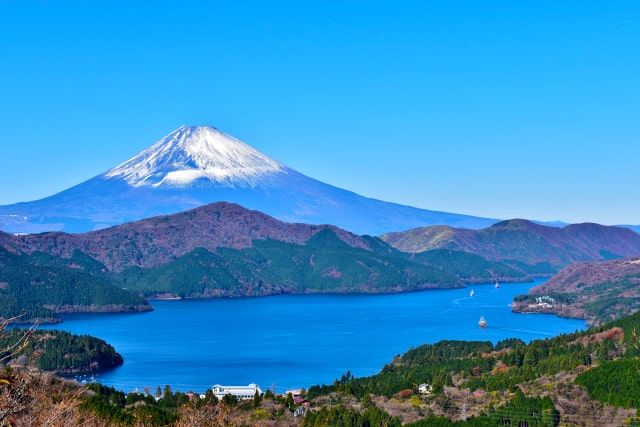
Hakone is the easier choice when you want variety rather than a single Fuji-focused viewpoint. Typical highlights include Hakone-Yumoto, the Hakone Tozan transport network, Owakudani, Lake Ashi, ropeways, museums and onsen.
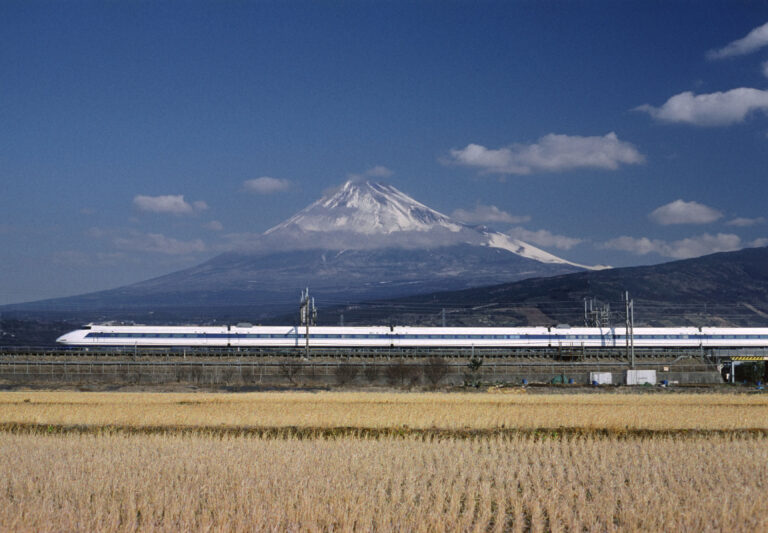
From Shinjuku, Hakone-Yumoto is about 90 minutes by Odakyu. From Tokyo Station, the Tokaido Shinkansen to Odawara followed by the Hakone Tozan line can take roughly 55 minutes to Hakone-Yumoto. Exact connections vary, so check your travel date before leaving.
Best for: travelers who want a varied day, couples, onsen users, art/museum interests and anyone already considering Hakone as an overnight stop between Tokyo and Kyoto.
Main trade-off: Mount Fuji can be visible from parts of Hakone, but the area is not as consistently Fuji-focused as Kawaguchiko. If seeing the mountain itself is the whole purpose of the trip, the Fuji Five Lakes are usually the better fit.
Option 2: Fuji Five Lakes and Kawaguchiko
The Fuji Five Lakes area includes Kawaguchiko, Yamanakako, Saiko, Shojiko and Motosuko. For most first-time day-trippers, Kawaguchiko is the most practical base because it has the strongest transport connections, more visitor infrastructure and multiple viewpoints around the lake.
JNTO lists highway-bus journeys from Tokyo to Kawaguchiko at roughly two hours, while direct or connecting train journeys are also available. A common rail route uses the JR Chuo Line toward Otsuki, then the Fujikyu line to Kawaguchiko. Travel time depends on the specific train and whether you use a direct limited express.
Best for: photographers, scenic-view travelers, couples, first-time visitors whose main goal is Mount Fuji and anyone willing to keep the day flexible around weather.
Main trade-off: this is a more weather-dependent day. If clouds hide Fuji, the trip can feel less rewarding unless you also enjoy lakeside walking, museums, ropeways and the general landscape.
Fuji visibility: plan around the mountain, not the Tokyo forecast
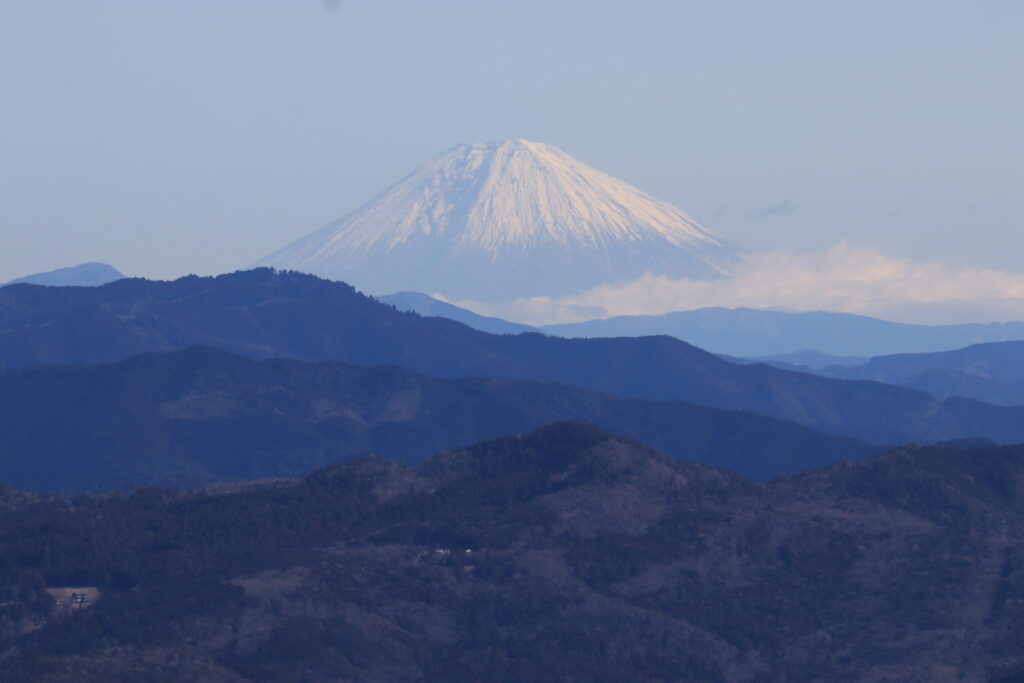
Mount Fuji can disappear behind cloud or haze even when Tokyo feels bright. The Fuji Five Lakes are generally strongest for clear views earlier in the day, and JNTO notes that haze and cloud often build as the day progresses. Winter also tends to offer clearer visibility than humid summer periods.
If seeing Fuji is the main reason for the trip, check a local mountain-area forecast close to departure and avoid locking yourself into a non-refundable plan too early when flexibility is possible.
Can you combine Hakone and Fuji Five Lakes?
Technically yes, but for most travelers the answer should be no for a normal Tokyo day trip. Hakone and Kawaguchiko are separate sightseeing areas with their own transport networks. Combining them reduces the time available for lakes, viewpoints, onsen, museums or meals and makes the day much more vulnerable to delays.
If you want both, a better approach is to make one of the areas an overnight stop and continue the route the following day.
Which option fits different travelers?
- First Japan trip, Fuji is the priority: Kawaguchiko.
- You want onsen and scenery: Hakone.
- You want the classic lake-and-Fuji photos: Fuji Five Lakes.
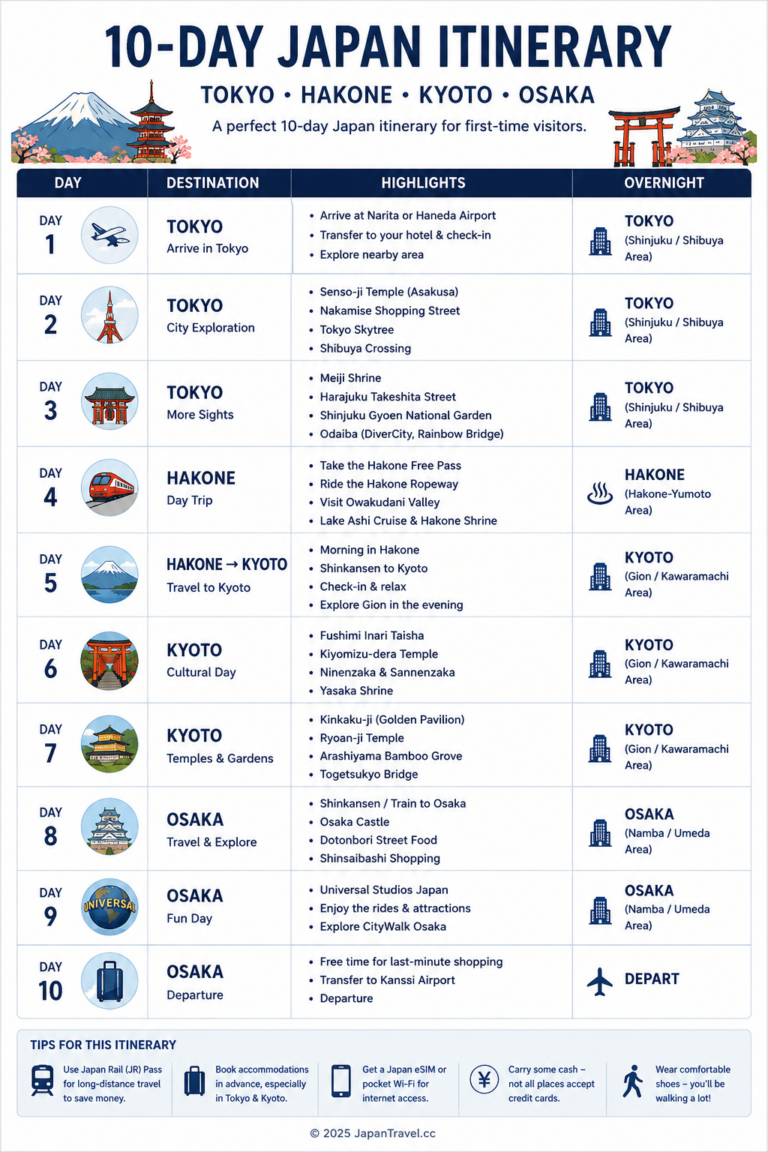
- You are traveling Tokyo → Kyoto and want a stop in between: Hakone is usually easier to integrate.
- You dislike weather-dependent sightseeing: Hakone has more non-Fuji activities to fall back on.
- You are traveling with children: choose one compact area and avoid combining both.
How much time should you allow?
For either destination, treat it as a full-day trip. Leave Tokyo early, keep the sightseeing plan focused and avoid booking a late-evening activity back in Tokyo that depends on a perfectly timed return.
At Kawaguchiko, choose two or three priorities rather than trying to circle every lake. In Hakone, use the sightseeing loop selectively rather than assuming you must complete every segment.
Weather backup plan
If Fuji is hidden at Kawaguchiko, switch the goal from “see the mountain” to “enjoy the area”: lakeside walking, museums, cafes, ropeway viewpoints and seasonal scenery can still make the day worthwhile. In Hakone, poor Fuji visibility matters less because onsen, museums, Lake Ashi and Owakudani remain the main attractions.
What to bring
- Comfortable walking shoes.
- A light layer even when Tokyo feels warm.
- Water and a small snack for longer transfers.
- Mobile data for route and weather checks.
- A backup plan if mountain visibility is poor.
Useful planning tools
For mobile maps and weather checks, check Japan eSIM options with Saily.
For relevant route comparisons, compare transport options with Bookaway. If your wider itinerary includes rural driving, compare rental-car options with DiscoverCars.
Affiliate disclosure: Japan Travel may earn a commission if you book through selected links, at no extra cost to you.
Bottom line
If your dream is a clear, classic Mount Fuji view, choose Kawaguchiko and the Fuji Five Lakes. If you want a more varied sightseeing day with onsen, lake scenery and museums, choose Hakone. For most visitors, trying to do both in one day makes the trip worse rather than better.