
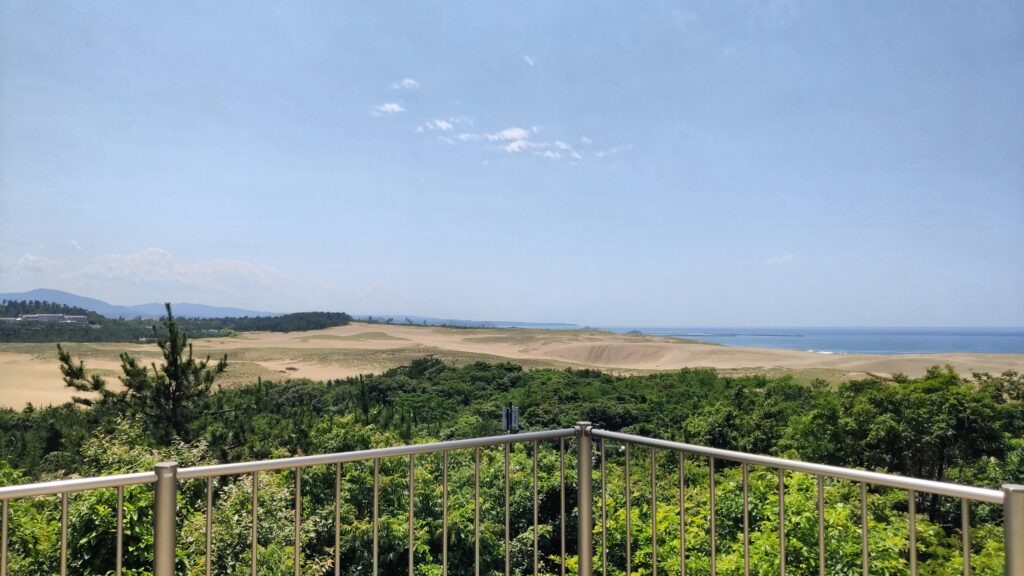
The Tottori Sand Dunes are one of Japan’s most unusual landscapes and a strong addition for travelers who want something beyond the standard Tokyo–Kyoto–Osaka route. The dunes sit on the Sea of Japan coast and form the best-known landscape in eastern Tottori.
Quick answer: is Tottori worth adding?
Yes, if you enjoy landscapes, photography, slower regional travel or have already covered Japan’s major first-time cities. Probably not if you only have 5–7 days and would need to sacrifice Tokyo, Kyoto or Osaka time to reach it.
What to see at the dunes
The classic experience is walking from the main entrance toward Umanose (“the horse’s back”), the prominent dune ridge overlooking the Sea of Japan. The wider dune field stretches for many kilometers, so you do not need to cover the whole area to appreciate its scale.
Wind creates changing ripple patterns in the sand, and conditions can look completely different depending on recent weather. The landscape is open and exposed, with little shade once you are on the dunes.
How much time do you need?
Allow around 2–3 hours for a relaxed dune visit, including walking, viewpoints and breaks. Add more time if you want the Sand Museum, lunch nearby or activities such as sandboarding. If you are traveling a long distance to reach Tottori, an overnight stay usually makes the journey feel more worthwhile.
Getting there from Tottori Station
The dunes are outside central Tottori. Official Tottori tourism information lists local buses from JR Tottori Station to the Tottori Sand Dunes area, with the ride generally around 20–30 minutes depending on the service. Weekend and holiday sightseeing buses may also operate. Check the current timetable on your travel date rather than assuming a fixed frequency.
A taxi can be useful for a small group or when bus timing is inconvenient, especially if you want to combine the dunes with nearby sights efficiently.
Best time of day
Morning is usually the most comfortable choice in warmer months and gives you more flexibility for the rest of the day. Later afternoon can be attractive for softer light, but do not leave yourself dependent on the final bus connection back to the city.
Spring and autumn are generally easier for walking than peak summer heat. In summer, start earlier, carry water and expect the exposed sand to feel hotter than the city. Winter can be dramatic, but wind, rain or snow can make the experience much more demanding.
What to wear and bring
- Comfortable shoes that can handle sand.
- Water, sunscreen and a hat in warmer weather.
- A wind-resistant layer when conditions are breezy.
- A small towel or spare socks if sand gets into your shoes.
- Mobile data for bus schedules and weather checks.
Facilities near the main entrance include areas where visitors can deal with sandy footwear, and local tourism information notes accessible approaches for wheelchairs and strollers near the municipal parking area.
Add the Sand Museum
The Tottori Sand Museum is a natural companion to the dunes and is only a short walk from the main area. It presents large-scale sand sculptures in changing themed exhibitions. Because exhibit periods and closure dates can change between annual themes, check the museum’s current calendar before building the day around it.
Can you visit as a day trip?
From another part of the San’in region, yes. From Osaka or Kyoto, it can be done but becomes a long transport-heavy day. From Tokyo, it is not a sensible same-day outing. Tottori works much better as part of a western-Japan or San’in itinerary, or as an overnight stop.
What to combine with Tottori
If you have more time, consider the Uradome Coast, local seafood, central Tottori or other eastern-Tottori sights. The dunes should be the anchor, not the only 30-minute stop after a long journey.
Who should choose Tottori?
- Repeat Japan visitors: excellent fit.
- Photographers and landscape travelers: strong fit.
- Families: workable, but consider heat, wind and the effort of walking on sand.
- First-time visitors with 10+ days: possible if regional variety matters more than maximizing famous cities.
- Short first trips: usually skip it for now.
Useful planning tools
For route comparisons, compare transport options with Bookaway where relevant.
If you stay overnight, compare Japan accommodation for your Tottori dates, then confirm the property’s actual location before booking.
Reliable mobile data is useful for regional transport changes. Check Japan eSIM options with Saily.
Affiliate disclosure: Japan Travel may earn a commission if you book through selected links, at no extra cost to you.
Bottom line
Tottori is not a must for every first Japan trip, and that is exactly why it can be rewarding. Add it when you have enough time to enjoy a slower regional stop rather than forcing it into an already crowded itinerary.