
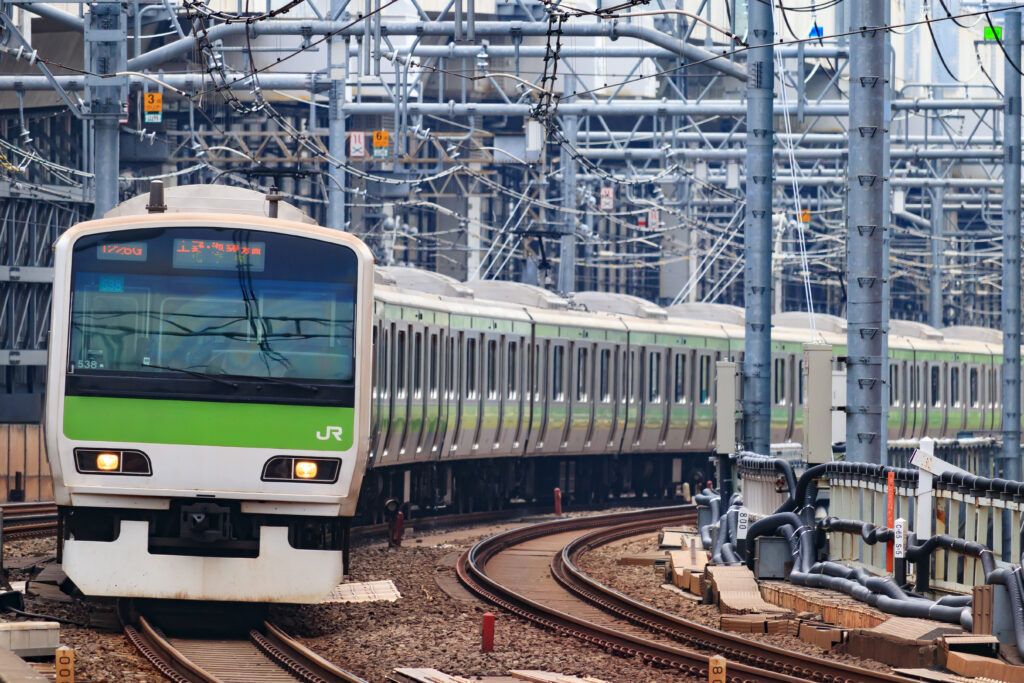
Japan’s train system is one of the easiest ways to travel around the country, but your first experience can still feel overwhelming. The difficult part is often not the train itself—it is finding the correct entrance, platform, transfer route and station exit while everyone around you seems to know exactly where they are going.
For the bigger transport picture, start with the Japan Transportation Guide. If you are deciding what to buy for your trip, also read Japan Rail Pass vs IC Cards.
The train is only half the journey
A real trip can look like this: hotel → station entrance → ticket gate → platform → train → transfer → another platform → station exit → street → destination. A mistake at any stage can add unnecessary walking or confusion.
Large stations: navigate to the destination, not just the station
Shinjuku is a good example. Reaching ‘Shinjuku Station’ is not enough when the complex has multiple lines, gates and exits. Your real destination is the hotel, restaurant, attraction or neighborhood you are trying to reach.
When using a navigation app, search for the actual destination and pay attention to the walking portion of the journey, including the recommended exit when available.
Use your phone, but trust station signs too
Navigation apps are extremely useful, but GPS can be unreliable underground and across multi-level station complexes. Use the phone to understand the overall route, then use physical station signs to confirm the line, platform, transfer and exit.
- Search for the actual destination rather than only the station name.
- Check the walking portion before leaving the station.
- Screenshot critical directions if connectivity may be unreliable.
- Look for the numbered or named exit on station signs.
- If the app and station signs seem to disagree, stop and verify rather than guessing.
Reliable mobile data makes these situations easier. Check Japan eSIM options with Saily before departure.
How to survive a huge station
Do not stop in the middle of a busy corridor to study your phone. Move to the side first. Have your ticket or IC card ready before reaching the gate, keep luggage out of the main pedestrian flow and allow passengers to exit before boarding.
What if you are going the wrong way?
Do not panic. Move somewhere that does not block traffic, check the route again and look for the next sign pointing toward your line or exit. If you are still unsure, ask station staff. Spending one minute confirming the direction is better than walking ten minutes the wrong way.
Rush hour
Crowded commuter trains can be intimidating, particularly with luggage. If your schedule is flexible, travel outside the busiest periods. On a crowded platform, follow the queue markings and allow passengers to get off before boarding.
Your luggage matters
A large suitcase can turn a simple transfer into a stressful experience. Keep luggage close and avoid blocking corridors or doors. On longer trips, luggage forwarding can be worth considering so you do not have to carry everything through major stations.
The Shinkansen feels different
Once you get through the complexity of a major station, long-distance rail can be one of the most comfortable parts of a Japan trip. Reserved seating and advance luggage planning can make longer journeys easier.
For multi-city route planning, compare transport options with Bookaway where relevant.
A simple Japan train survival formula
- Know your destination, not just the station.
- Use navigation apps for the complete journey.
- Check the recommended entrance or exit when available.
- Follow physical station signs once inside.
- Move aside when you need to stop and think.
- Avoid peak crowds when your schedule allows.
- Keep luggage under control.
- Ask station staff when you are genuinely stuck.
Affiliate disclosure: Japan Travel may earn a commission if you book through selected links, at no extra cost to you.