Japan’s transport network can look complicated at first, but most visitors quickly find a simple rhythm: use an IC card for everyday local travel, reserve longer-distance trains when needed, and use the Shinkansen when the time saved matters to your itinerary.
Think about transport in three parts
- Airport to city: airport train, limousine bus or another transfer depending on your hotel and arrival time.
- Around a city: local trains, subways and buses are usually the most practical.
- Between cities: conventional limited express services and the Shinkansen are the main options.
IC cards for everyday travel
IC cards are rechargeable transport cards that let you tap in and out at compatible stations and on many buses. For a first-time visitor, the biggest advantage is convenience: you do not need to calculate every local fare in advance.
Compatibility is broad, but check the exact route when traveling outside major urban networks.
Local, rapid and limited express trains
Not every train is a Shinkansen. Large cities use local and rapid services, while longer regional routes may use limited express trains. The differences include stopping patterns and whether an additional fare or seat reservation is required.
When should you use the Shinkansen?
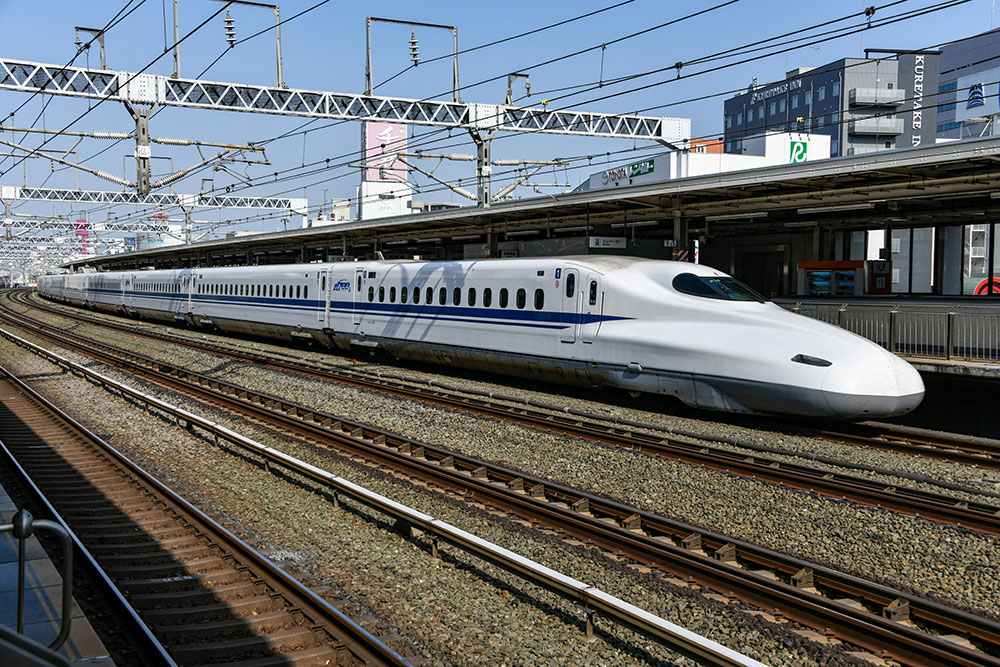
The Shinkansen is most useful between major cities when saving time is valuable. A Tokyo–Kyoto journey is a classic example. Compare the whole trip, including access to and from the stations, not only the train’s running time.
Reserve seats when your travel date is busy, when you are traveling as a group, or when you want more certainty about seating.
Do you need a Japan Rail Pass?
A nationwide rail pass is not automatically the best choice. Build your itinerary first, total the eligible long-distance journeys, then compare that with the current pass price. Your route should determine your transport strategy—not the other way around.
See Japan Rail Pass vs IC Cards for the decision process.
Airport transfers
Plan the airport transfer before your first day because arriving with luggage is different from an ordinary sightseeing journey. Check your terminal, arrival time, immigration and baggage time, the station or bus stop nearest the hotel, and the last departure if you arrive late.
Practical train tips
- Keep your hotel address and destination station easy to access.
- Check station names carefully; major cities can have several similar names.
- Allow transfer time in large stations and between different operators.
- Leave flexibility instead of planning every sightseeing minute around train connections.
- Check luggage rules or reserved-space requirements for long journeys.
For detailed station navigation advice, read Japan Train Travel: Trains, Stations, Rush Hour & Transfers.
Mobile data makes navigation much easier. Check Japan eSIM options with Saily before departure.
For routes where comparison tools are useful, compare transport options with Bookaway. If your plan extends into rural areas where rail is less convenient, compare rental-car options with DiscoverCars.
Affiliate disclosure: Japan Travel may earn a commission if you book through selected links, at no extra cost to you.